The Backstory
Chapter 1: 1871
Catherine O’Leary and her husband, Patrick, were Irish immigrants who settled in Chicago’s West Side and became industrious, stalwart members of their community. They owned their home at 137 DeKoven Street and even rented another home on the lot. He was a laborer who fought for the Union in the Civil War. She had her own business as a milkmaid.
When the O’Leary barn ignited on the night of October 8, 1871, Chicago would never be the same.
Nor would she.
With the fire still burning on the morning of October 9, the Evening Journal put out an “Extra” that said the fire “broke out on the corner of DeKoven and Twelfth streets, at about 9 o’clock on Sunday evening, being caused by a cow kicking over a lamp in a stable in which a woman was milking.”
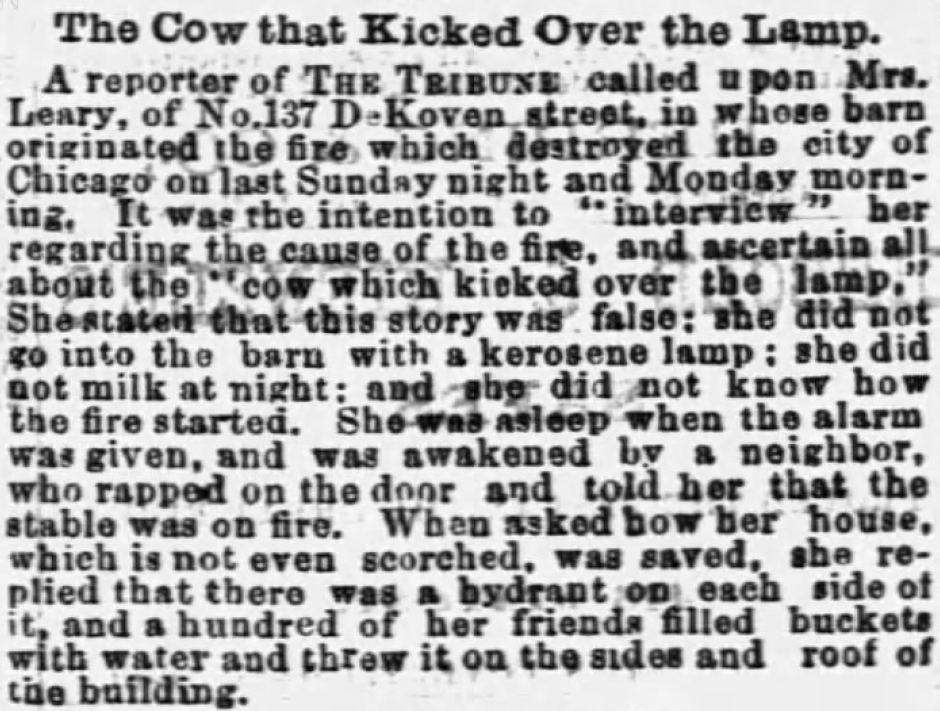
Catherine O’Leary would testify before a city board investigating the fire. She would be depicted in artist’s caricatures as an old crone (despite being about 45 at the time of the fire). Among other indignities, she would be the subject of a twisted version of “This Is the House That Jack Built.” But she would not submit to photos or interviews. And she would not change her story: She and her family were in bed when the fire broke out.
In death, 24 years after the fire, she was known simply as the woman whose cow started the fire.
Then, 102 years after she died, the Chicago City Council exonerated her and her cow.
But that isn’t the end of the story…
Chapter 2: 2025
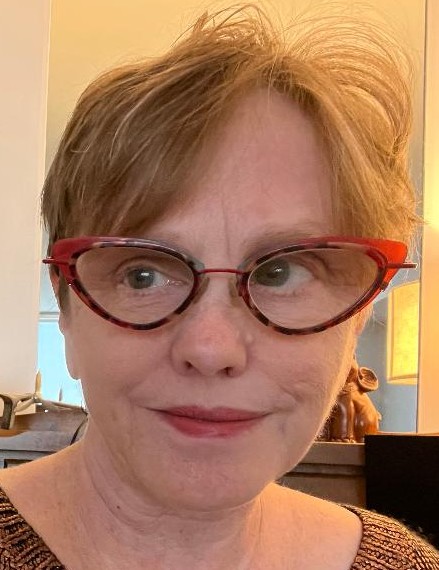
Melissa Birks is a native of West Michigan who sang a cheerful ditty called “Hot Time in the Old Town” as a Girl Scout in the early 1970s. In that song, a woman named Mrs. O’Leary winks after her cow kicks a lantern in the shed. Even as a pre-teen, Melissa thought that Mrs. O’Leary’s cheeky response to a fire hazard seemed odd … But, the song had an upbeat tempo, catchy rhyme scheme, and this memorable quote attributed to the milkmaid: “There’ll be a hot time in the old town tonight.”
Fast forward to a winter day in early 2025. Melissa was chatting on the phone with her dear old mother, some three hours north of Chicago in West Michigan. As is her habit, her mother picked up a book and started reading it aloud. As is her habit, Melissa pretended to listen.
But on this day, Melissa’s mother happened to select a book about “bad days in history.” She randomly selected a blurb about one particularly bad day for Chicago.
On the phone in Chicago, Melissa stopped pretending and actively listened. A spark ignited.
Melissa has an MFA in screenwriting from DePaul University. As she listened to her mother read that brief item about Catherine O’Leary, she envisioned the cinematic possibilities.
Because it’s best to start at the beginning, Melissa began by researching the fire. A search on Amazon led her to a book called The Great Chicago Fire and the Myth of Mrs. O’Leary’s Cow by historian Richard Bales. His meticulous investigation reveals the true culprit of the fire. Melissa emailed him:
“I’m a Chicago-based writer who believes that today’s social, cultural, and political environment is right to reveal a wrong: the fate of Catherine O’Leary. Her story has the elements of a powerful feature film, and I want to write it.”
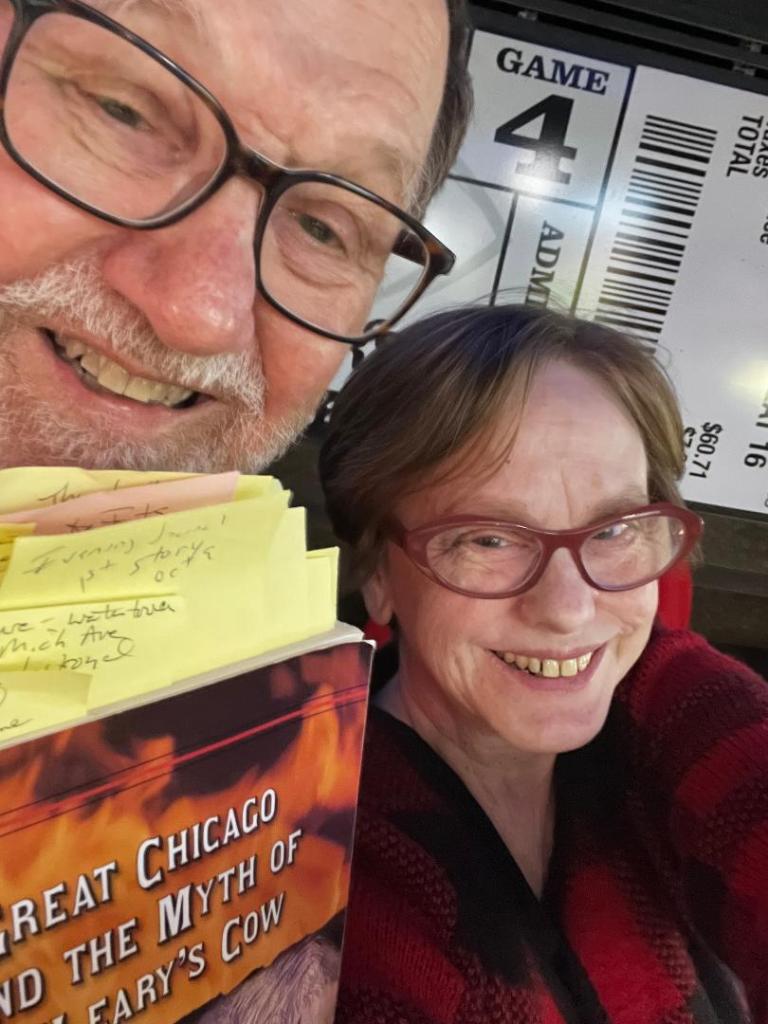
She and Mr. Bales met near Chicago’s Union Station. As she wrote, she leaned on his expertise and support.
Months later, Melissa worked with a Chicago screenwriting consultant to improve the script.
As they discussed the screenplay over Zoom, they brainstormed next steps. At first, the idea he suggested rattled her: Adapt the screenplay into a play. Catherine O’Leary, by then dead for 130 years, would draw Chicago audiences to local theaters.
One problem: Melissa had never written a play. But if not then — when?
By the end of 2025, she’d adapted the screenplay into a play. That December, she produced a table read of the play at the Newberry Library, which itself is a legacy of the “Great Fire”: It sits on land that once held a home that survived the fire.
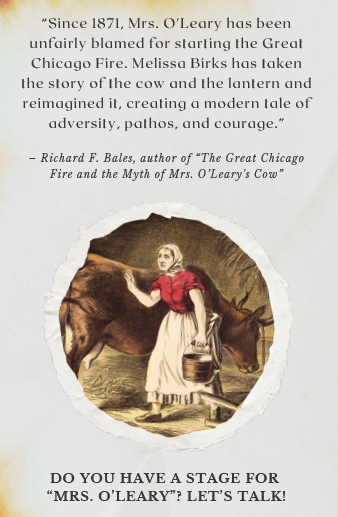
Mr. Bales shared these kind words for the playbill.
Chapter 3: 2026
The year 2026 marks the 155th anniversary of the Great Fire.
Early that year, two great-great grandchildren, from different branches of the family tree, met at Holy Family church — the church where their “infamous” ancestors worshipped. Surrounded by the majesty and serenity of Holy Family, Nancy Connolly and Paul Monreal imagined conversations with the family they never met but who remains so close.
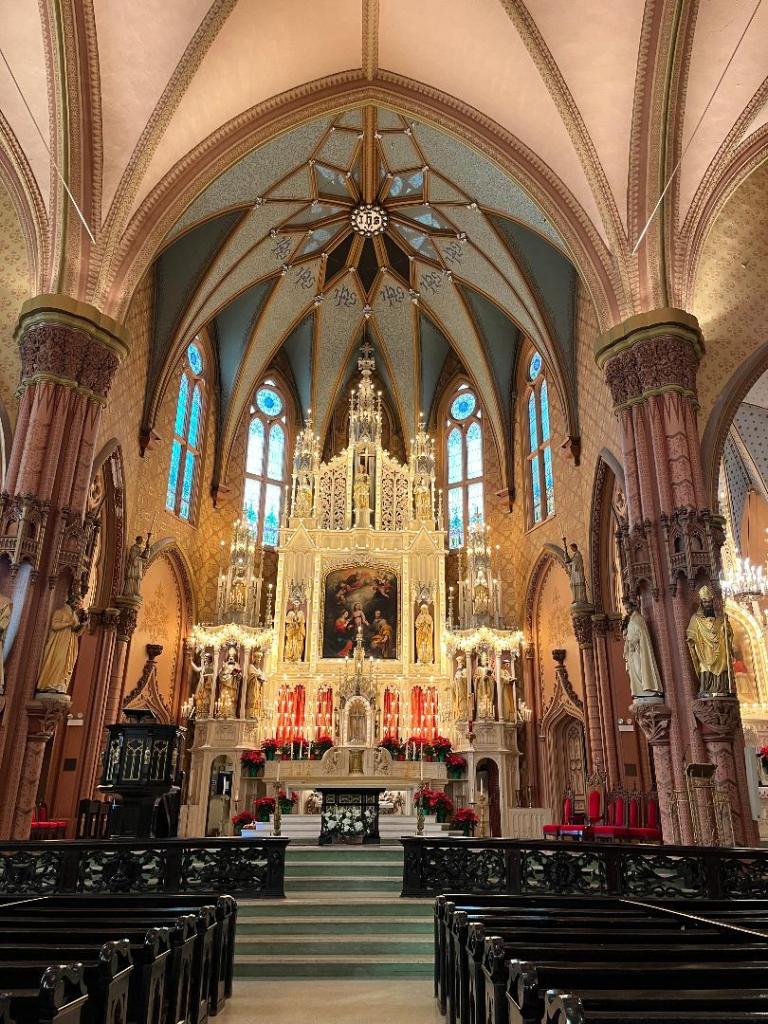
“I have so much compassion for what she had to go through…” Nancy said.
Compassion for Mrs. O’Leary was in short supply in 1871.
If not now, when?
Let’s write the next chapter together.
 Free Mrs. O'Leary!